GUIDE FOR CAREGIVERS
| Site: | EbyE_v1 |
| Course: | Guide for Caregivers |
| Book: | GUIDE FOR CAREGIVERS |
| Printed by: | Guest user |
| Date: | Friday, 23 October 2026, 12:36 PM |
Cover
GUIDE FOR CAREGIVERS
|
|
|


KA210-ADU · Small-scale Partnerships in Adult Education
EMPOWERED BY EMPATHY
EMOTIONAL INTELLIGENCE TRAINING PROGRAMME
IN THE CARE OF DISADVANTAGED CHILDREN

Project No: 2024-2-TR01-KA210-ADU-000264783
Coordinator: Kırıkkale Social Service Association (KISODER)
2026
|
|
|
|
|


Imprint
IMPRINT
Project Name: Empowered by Empathy – Emotional Intelligence in Caring for Disadvantaged Children
(Empatiyle Güçlenmek – Dezavantajlı Çocukların Bakımında Duygusal Zeka)
Project Type: Erasmus+ KA210-ADU – Small-scale Partnerships in Adult Education
Project Number: 2024-2-TR01-KA210-ADU-000264783
Coordinator: Kırıkkale Social Service Association (KISODER)
Partners: Kırıkkale Provincial Directorate of Family and Social Services (Türkiye)
Instytut Family Center (Poland)
Redefine (Portugal)
Funder: European Union – Erasmus+ Programme (through the Turkish National Agency)
Contributors
Selami Kaynakhan (Project Coordinator)
Dr. Magdalena Reka (Psychologist)
Dr. Franciszek Reka
Çiğdem Açıkyıldız Kazel (Social Worker)
Dr. Muradiye Oral (Psychologist)
Elif Eker Ataç (Psychologist)
Havva Şensoy (Sociologist)
Selda Usul Ergörün (Psychologist)
Büşra Şimşir Altaş (Social Worker)
Eda Sevinç Başer (Sociologist)
Funded by the European Union. The views and opinions expressed are, however, those of the author(s) alone and do not necessarily reflect those of the European Union or the Turkish National Agency. Neither the European Union nor the Turkish National Agency can be held responsible for them.
© 2026 Kırıkkale Social Service Association (KISODER)
This publication may be reproduced and shared for educational purposes, provided that the source is acknowledged; it may not be used for commercial purposes. This book is free of charge and may not be sold.
|
|
|


GUIDE FOR CAREGIVERS – AI-assisted language notice:
The English, Portuguese and Polish versions of this publication were prepared with AI support for translation and/or linguistic editing and were subsequently subject to human review and validation. Despite this review, residual translation, transcription or editorial errors may remain. In the event of any discrepancy, the Turkish source version should be consulted as the primary reference.
Introduction
Empowered by Empathy: Emotional Intelligence in the Care of Disadvantaged Children

Dear Caregivers
The early childhood years are the “golden age” of human development, and during this period your role in children’s development is invaluable. We used to believe that high marks or academic intelligence (IQ) alone were enough to succeed in life. Today, however, we know that Emotional Intelligence (EQ) is one of the most important keys to being happy, coping with stress and achieving success in both personal and professional life is Emotional Intelligence (EQ).
It is impossible to eliminate life’s risks or stressful moments entirely; however, by strengthening children’s “protective factors” we can teach them how to surf these waves. Remember that one of the most important tasks in raising a child is to build an environment in which emotions are respected, because children learn not only from what adults say but also from what they observe adults doing.
This guide has been prepared as a practical road map to help you respond to tantrums and crying spells and support children in becoming increasingly independent, empathetic and able to experience well-being.
Wishing us growth and learning together…
Emotional Awareness
1. Emotional Awareness (Self-Awareness): Recognising and Naming Emotions
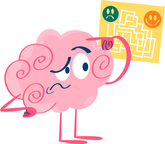
What Is Emotional Awareness (Self-Awareness)?
Emotional awareness is the ability to notice an emotion as it arises, and it forms a foundation of emotional intelligence. Instead of saying only “I feel bad”, the aim is to be able to say, for example, “I feel disappointed” or “I feel jealous”.
Let’s Get to Know the Basic Emotions
- Anger — Helps us protect our boundaries.
- Sadness — Helps us adapt to losses and gather our energy.
- Fear — Keeps us alert to danger.
- Joy / Enjoyment — Helps us experience satisfaction and pleasure in life.
- Love — Supports us in forming secure bonds.
- Surprise — Focuses our attention on new situations.
- Disgust — Helps us keep away from harmful things.
- Shame — Gives feedback about social adjustment and personal boundaries.
Five Core Skills for Emotional Intelligence
The RULER method, developed by the Yale Center for Emotional Intelligence, offers a five-part framework for emotional skills.
01 Recognising — Being able to read and recognise emotions in ourselves and others through facial expressions, body language and other cues.
02 Understanding — Being able to understand where an emotion comes from, including its causes and possible consequences.
03 Labelling — Going beyond broad words such as “angry” or “bad” and naming feelings more precisely, using a richer emotional vocabulary such as “frustrated”, “irritated” or “furious”.
04 Expressing — Learning how to express feelings without harming others. The core rule is: “All emotions are allowed to be felt, but not every behaviour is allowed.”
05 Regulating — Developing the ability to pause and think before acting on an emotion. For young children, calming down may involve deep “belly breaths”, moving to a quiet space or receiving a comforting hug. As children grow, they gradually develop more independent strategies for motivation and problem-solving.
A Practical Tool: The Mood Meter
The Mood Meter is a visual way to help children name emotions. It places feelings in four colour zones along two axes: Energy (high/low) and Pleasantness (pleasant/unpleasant).
Yellow Zone (High Energy, Pleasant) — Happy, excited, optimistic and enthusiastic feelings.
Green Zone (Low Energy, Pleasant) — Calm, peaceful, relaxed and balanced feelings.
Blue Zone (Low Energy, Unpleasant) — Sad, disappointed, hopeless or tired feelings.
Red Zone (High Energy, Unpleasant) — Angry, anxious, frightened or terrified feelings.
The Caregiver’s Role: Permission to Feel
Children learn how to cope with intense emotions by watching the adults around them. The caregiver’s role is not to be a critic but an “emotion coach”. Emotional outbursts can be approached not only as behaviour to manage but also as opportunities to connect with the child and help them name what they are feeling.
Detailed Home Activities
The “Fridge Mood Meter” Routine
How to do it: Hang the Mood Meter, with its Yellow, Green, Blue and Red zones, on the fridge. As a family, check in each day by asking, “Which colour are you on the Mood Meter right now?” Once the child identifies the colour, help them find a more precise emotion within that zone, for example: “I’m in the red because I feel disappointed.”
Purpose: To develop emotional awareness and the RULER skill of Labelling by making the child’s inner experience more concrete through colours instead of relying only on “I feel bad”.
The “Being a Potato” Game
How to do it: Ask the child to imagine that they are a potato. Give instructions such as: “Now you’re at the market and being put into a bag. Now you’re in the kitchen and being peeled”—invite exaggerated facial expressions—“and now you’ve been dropped into hot oil.”
Purpose: To increase inner awareness by encouraging the child to show, through facial expressions, states such as excitement, pain, surprise or fear in response to different situations.
Managing Emotions
2. Managing Emotions and Crisis Management
What Does Managing Emotions Mean?
Managing emotions does not mean suppressing or ignoring feelings; it means guiding them without becoming captive to them. Instead of being a “thermometer” that instantly heats up or cools down according to the environment, the guide invites us to act more like a “thermostat” that regulates its own internal temperature. For a child, learning to say “I’m very angry right now” instead of throwing a toy can be a significant step.
A Four-Step Calming Method
You can use these four simple steps to manage moments of anger and crisis.
01 Take a Deep Breath — In a moment of anger, the brain sounds an emergency alarm and logical thinking becomes much harder. Deep breathing is used to help the body leave emergency mode and settle.
02 Name the Emotion — Saying silently or aloud, “I feel very disappointed right now”, can help shift the focus from an emotional reaction toward problem-solving.
03 Focus on the Present — Focus on the present moment rather than being swept away by a flood of thoughts. This can help the emotion lose its grip.
04 Do Not Believe Negative Thoughts — Notice exaggerated thoughts such as “Everything is ruined” or “They never listen to me”, and try to look at the event from another perspective.
The 90-Second Rule for Moments of Crisis
When anger or fear is triggered in the brain, its physical effect on the body is often described as lasting around 90 seconds. If, during that short time, we do not feed the anger with catastrophic thoughts such as “They always do this”, the emotional wave comes and passes. Teaching your child—and yourself—to “surf” this 90-second wave is one of the most powerful ways to prevent shouting and yelling.
What Should We Do as Caregivers?
Young children cannot calm down on their own; they need your calmness. It highlights two rules for moments of crisis:
- The Power of Pausing — Instead of reacting immediately to a child’s meltdown, pause for one breath and wait. This short pause can reduce impulsive responses that may later be regretted.
- Allow the Emotion, Set Limits on Behaviour — Use the principle: “All emotions are normal, but not every behaviour is permitted.” For example: “I understand you’re very angry right now, but I can’t let you hit your sibling.”
Detailed Home Activities
The “Turtle Technique”
How to do it: Teach the child to act like a turtle when they become very angry. The four steps are: notice the feeling and say “Stop”; imagine pulling into a turtle shell and folding the arms; calm down with deep breathing; and, once calm, come out of the shell and try to solve the problem.
The “Calming Corner”
Place soft cushions, stress balls and emotion cards in a corner of the home. This is not a punishment corner. It should be a break space the child may choose to use when they are very angry or want to cry and need time to settle.
Empathy
3. Understanding Others — “Empathy”
What Is Empathy?
What we all want most in life is to be “seen, heard and understood”. Empathy is more than being polite; it involves trying to understand what another person feels from their perspective while maintaining our own sense of self.
Empathy is not a magical ability but is linked to the biology of the brain; “mirror neurons” are thought to play a role in helping us resonate with the emotions of someone we see crying or in pain. Empathy is like a muscle: it becomes stronger with use and practice.
The Critical Difference Between Pity and Empathy
This is one of the most important distinctions to teach children. Pity says, “I feel sorry for you” and observes from a distance, whereas empathy says, “I understand you; I feel this pain with you” and moves closer to form a connection.
A Three-Step Formula to Understand Your Child
- Listen to Understand, Not to Reply — Do not judge or interrupt; give the child your full attention and be present.
- Say What You Notice — Reflect the feeling back like a mirror, for example: “This situation seems to have really overwhelmed and disappointed you.”
- Validate the Emotion — Say, for example: “It makes sense that you feel this way.” Validating an emotion does not mean approving every behaviour; it means acknowledging the child’s emotional experience.
Simple Home Games
The “Take My Place” Game
As a family, everyone writes a funny, sad or difficult event they have experienced on a small piece of paper and puts it in a bag. Everyone then draws a paper and tells or acts out the event as though they had experienced it themselves, using the first person (“I”). The aim is to practise perspective-taking.
The “Habit of Kindness”
Empathy is presented not only as feeling but also as action. Encourage the child to make a get-well card for a sick relative or friend, give water to street animals, or help a sibling or another member of the household. The activity shifts attention outward and encourages awareness of other people’s needs.
Social Skills
4. Social Skills and Conflict Resolution
What Are Social Skills and Communication?
Social skills are the ways in which a person who understands their own feelings and can empathise with others expresses these abilities in relationships. These skills support getting along with others, working together and resolving disagreements without turning them into fights.
A basic element is being a good listener: listening without interrupting, avoiding constantly turning the conversation back to oneself, and trying not to judge. This helps people understand one another’s feelings and communicate more effectively.
Conflict Resolution Strategies
Children and adults frequently experience conflict. The guide presents five strategies that can be taught to children using animal symbols:
Turtle Strategy (Withdrawal) — Stays silent to avoid an argument and may avoid defending legitimate rights in order to prevent tension.
Teddy Bear Strategy (Giving In) — Neglects personal needs in order to appear agreeable and prioritises the other person’s wishes so that no one is upset.
Shark Strategy (Forcing) — Focuses only on personal goals, uses pressure and tries to “win” without giving enough attention to the other person’s feelings.
Fox Strategy (Compromise) — Looks for mutual concessions so that each side gives up something and the parties meet in the middle, for example: “I’ll play for a while, then you play.”
Owl Strategy (Collaboration) — Looks at the root of the problem and seeks a constructive, fair solution that tries to meet everyone’s needs.
The Caregiver’s Role: Guiding Toward Solutions
When a child has a problem, instead of solving it for them or acting as a judge who decides who is right, ask which animal strategy they are using and guide them towards a more constructive solution. The aim is to help children use Fox or Owl strategies when appropriate rather than defaulting to Turtle or Shark responses.
Simple Home Games
“Create a Solution, Use It!”
How to do it: Choose an everyday problem, such as one sibling damaging another’s belongings or two children arguing over a toy. In role-play, ask the child first to respond like a Shark (forcing) and then like a Fox (compromising). Purpose: To compare the consequences of different strategies and experience how a more constructive solution can help both sides.
“Tearing Paper”
How to do it: Give each family member an A4 sheet of paper and ask everyone to close their eyes. Questions and opening the eyes are not allowed. Give instructions such as: “Fold the paper in half. Tear off the top-left corner. Fold it in half again. Tear off the bottom-left corner.” When everyone opens their eyes, the papers will be different. Purpose: To demonstrate how one-way listening, without questions, interaction and feedback, can lead to different interpretations and communication breakdowns.
Assertiveness
5. Assertiveness Skills: Self-Expression and Standing Up for Your Rights
What Is Assertiveness?
According to a personal-skills model associated with Reuven Bar-On’s work on emotional intelligence, assertiveness is the ability to express abilities, beliefs and thoughts openly and to defend legitimate rights in a constructive, non-violent way. Assertiveness also involves setting personal boundaries while respecting the boundaries and rights of others.
Communication Styles: Passive, Aggressive, Passive-Aggressive and Assertive
To help children stand up for their rights, the guide introduces four communication styles:
Passive (Withdrawn) Communication — Avoids conflict, struggles to express needs and may say “yes” when wanting to say “no”. The underlying belief is: “My needs are not important.”
Aggressive Communication — Dominates conversations, interrupts, criticises and tries to control events. The underlying belief is: “Only my needs matter.”
Passive-Aggressive Communication — Appears agreeable on the surface but expresses anger indirectly through sarcasm, behind-the-scenes behaviour or silence. The core belief is: “I won’t say this directly, but I’ll make you feel it.”
Assertive Communication — Honest, direct and respectful. The person states boundaries clearly while listening to the other person with empathy. The healthy belief is: “My needs matter, and so do yours.”
A Powerful Tool: “I” Statements
At the heart of assertive communication are “I” statements. Accusatory expressions such as “You never listen to me!” or “You’re so selfish!” can put the other person on the defensive. An “I” statement allows the speaker to take responsibility for their own feelings and needs without blaming. For example: “I feel unheard when I don’t have your full attention” rather than “You always…”.
Setting Boundaries and Being Able to Say “No”
Many people struggle to say “no” because they fear rejection or disappointing others. Teaching a child to say “no” appropriately supports personal well-being and healthy relationships. Saying “no” does not have to mean being rude or selfish; it can be a way of respecting personal boundaries, time and values. The ability to say “no” assertively is one of the most important forms of protection against peer pressure.
Simple Home Games
Passive, Aggressive and Assertive Role-Play
How to do it: Choose an everyday situation, for example a friend repeatedly asking to copy homework. Ask the child to respond first passively, then aggressively, and finally assertively—for example: “I can help you with the part you’re stuck on, but I can’t let you copy my homework.” Purpose: To compare the consequences of different communication styles and experience assertiveness as a constructive, non-violent approach.
Turn “You” Statements into “I” Statements
How to do it: Give the child an accusatory sentence such as “You always take my toys without permission!” and ask them to reformulate it as an “I” statement, for example: “I get very upset when my toys are taken without permission, and I want my belongings to be respected.” Purpose: To practise clear self-expression by taking responsibility for one’s own feelings rather than blaming the other person.
Developmental Stages
6. Emotion-Based Communication Across Developmental Stages
How Do Emotional Needs Change with Age?
Emotional skills develop over time alongside broader development. Understanding the child’s developmental stage helps caregivers set more realistic expectations. A two-year-old’s tantrum and a fifteen-year-old adolescent slamming a door may reflect very different developmental, psychological and contextual needs.
01 Infancy and Early Childhood (Ages 0–3): “Co-Regulation”
What’s happening? The reasoning part of the brain (the prefrontal cortex) is still developing. At this age, children mainly experience a few basic emotions very intensely, and their capacity to calm themselves is still very limited (self-regulation).
The caregiver’s role: The adult provides co-regulation. During a crisis, lengthy logical explanations may not be effective. The guide recommends calm physical presence, a soft tone of voice, secure connection and helping the child name the feeling, for example: “You’re very angry because we couldn’t get the toy. I understand, and I’m here.”
02 Preschool and School Age (Ages 4–10): “Emotion Coaching and Guidance”
What’s happening? As language develops, children increasingly express emotions in words, understand other people’s emotions and socialise. Impulse control is still developing.
The caregiver’s role: Use emotion coaching with clear behavioural boundaries and acceptance of feelings. Rather than solving every problem for the child, guide them towards finding their own solutions.
03 Adolescence (Ages 11+): “Observer, Supporter and Boundary-Keeper”
What’s happening? Adolescence is a period in which the brain is restructured, emotions are often experienced very intensely (sometimes called a “storm and stress” period), and the need for autonomy (independence) reaches its peak. Peer relationships frequently become more important, and can at times take precedence over family. The adolescent pushes boundaries to find their identity and may come into conflict with the parent or caregiver.
The caregiver’s role: A common mistake caregivers make is to take the adolescent’s reactions personally and enter into a power struggle. The guide recommends shifting from a “manager” role towards a more consultative role: listen without judging, ask “Would you like to hear my opinion?” before giving advice, and combine rules with consistent care and acceptance.
Home Activities for Different Age Groups
“A Journey to Imagination with Breathing Exercises” — Especially Ages 4–10
How to do it: When the child is stressed or anxious, help them sit comfortably and invite them to close their eyes. Ask them to breathe in through the nose while counting to four and release the breath slowly. Then guide an image such as: “Imagine yourself under a lush green tree. Around you are flowers of every colour. You feel relaxed. Breathe in the scent of the flowers… You can hear birds chirping and you feel safe.” Purpose: To use slow breathing and imagery to help reduce physical signs of stress and support settling.
“There’s a Letter for the Counsellor!” — School Age and Pre-Teens
How to do it: Put a “problem box” or letterbox in a corner of the home. The child, and adults if useful, may write a problem, stressor or mistake that feels difficult to discuss face to face and place it in the box, anonymously or under a nickname if preferred. After reading the letter, write back without judgement, in a compassionate and supportive voice. Purpose: To create a safer written channel for topics that feel embarrassing or difficult to discuss directly.
“Put Yourself in Your Parents’ Shoes!” — Adolescence
How to do it: Choose a topic that frequently causes disagreement, such as curfew, screen time or responsibilities, and swap roles. The adolescent plays the “parent” and explains the reason for the rule and the feelings behind it; the adult plays the “adolescent” and voices the objections. Purpose: To practise cognitive empathy and help both sides see the concerns and responsibilities behind each other’s position.
Emotion Coaching
7. Emotion Coaching: Coping with Aggression and Impulsivity
Anger Is Natural, but Aggression Is Unacceptable
Anger outbursts and aggression are challenging for many caregivers. The guide distinguishes between anger, an emotion that all people experience, and aggression, behaviour that harms people or objects. The caregiver’s task is not to prevent anger but to help the child develop impulse-control, self-regulation and emotion-regulation skills so that anger is less likely to become hitting, biting or throwing.
Parenting Styles and Their Effects on Emotional Development
There are three broad response styles in emotional moments:
Emotion-Dismissing Parent/Caregiver — Treats the child’s emotions, especially unpleasant ones, as unimportant or temporary and may quickly dismiss or distract from them, for example: “There’s nothing to cry about.” This can lead children to believe that their feelings are wrong and to suppress them.
Permissive / Laissez-Faire Parent/Caregiver — Accepts the child’s emotions and empathises but does not set behavioural limits or support problem-solving, for example by not intervening when the child hits or screams during a tantrum. Children raised in this style may find it harder to learn to control their impulses.
Emotion-Coaching Parent/Caregiver — Treats emotional crises as opportunities to connect and teach skills while also setting behavioural boundaries. This approach aims for a healthy balance of empathy and boundary-setting.
Dr John Gottman’s Five-Step Emotion Coaching Formula
Dr John Gottman’s emotion-coaching approach outlines five steps that can be applied during moments of crisis
01 Be Aware — Notice the child’s emotion, and your own, even when the intensity is still low.
02 See It as an Opportunity — Treat an outburst of anger or sadness as an opportunity to move closer, connect and teach rather than simply push the child away.
03 Listen with Empathy and Validate — Show that you understand the child’s inner experience, for example: “I can see that you’re very disappointed right now.” Validation does not mean permitting harmful behaviour; it means acknowledging the emotional experience.
04 Help Them Name the Emotion — Guide the child towards a more precise name for what they feel, for example: “It sounds as though you felt left out.”
05 Set Limits and Solve the Problem — Set a clear limit on behaviour and offer alternatives, for example: “It is okay to feel angry, but I can’t let you hit. We can use a safe way to release the energy, and then we can think about how to solve the problem.”
Brain “Modes” in a Crisis
You can recognise the child’s brain “mode” during a crisis as follows:
Survival Mode (Hitting/Breaking) — If the child is hitting or throwing objects, the brain is sounding a danger alarm and logical thinking becomes very difficult.
Emotional Mode (Shouting/Crying) — If the child is screaming or shouting, the child is being overtaken by emotion.
While the child is in these two modes, their capacity to hear you or solve problems is greatly reduced. For them to think logically again, they first need to feel safe. Respond calmly and compassionately rather than with punishment or escalation.
Home Activities for Different Age Groups
The Cotton-Blowing Game
How to do it: Lie down facing each other and place a small cotton ball between you. The rule is that the cotton may be blown only after the adult gives the “Blow” command. Purpose: To practise waiting for a turn, listening to a cue and inhibiting an immediate impulse in a playful activity.
Emotion Play with Puppets
How to do it: Use two puppets or soft toys to act out a familiar home conflict, such as two children struggling to share a toy. Let the child express intense feelings through a puppet from a safer distance, and then explore how the puppets can reach an understanding by “talking” instead of hitting. Purpose: To support emotional expression and problem-solving through play.