Trainer Handbook
Completion requirements
SESSION 4: EMPATHY
STEP 4: EMPATHY VERSUS PITY
STEP 4: Discussion on “Empathy versus Pity (Sympathy/Compassion)”
Note to the trainer: Ensure that staff can clearly see the critical distinction between “pity (sympathy/compassion)” and “understanding (empathy)”.
Method: Questions and answers and interactive discussion.
Materials: Whiteboard.
Implementation steps:
1. Explaining the critical difference: The trainer writes the two concepts on the board and gives the following explanation:
“Colleagues, the most important distinction that we need to teach our children and practise ourselves is this: pity says, ‘I feel sorry for you’, and looks from a distance, placing space between us. It may create a sense of inferiority in the child. Empathy says, ‘I understand you; I feel this pain or feeling with you’, sits beside the child and forms a connection. We will not pity children; we will sit beside them and build a bridge of empathy so that we can understand them.”
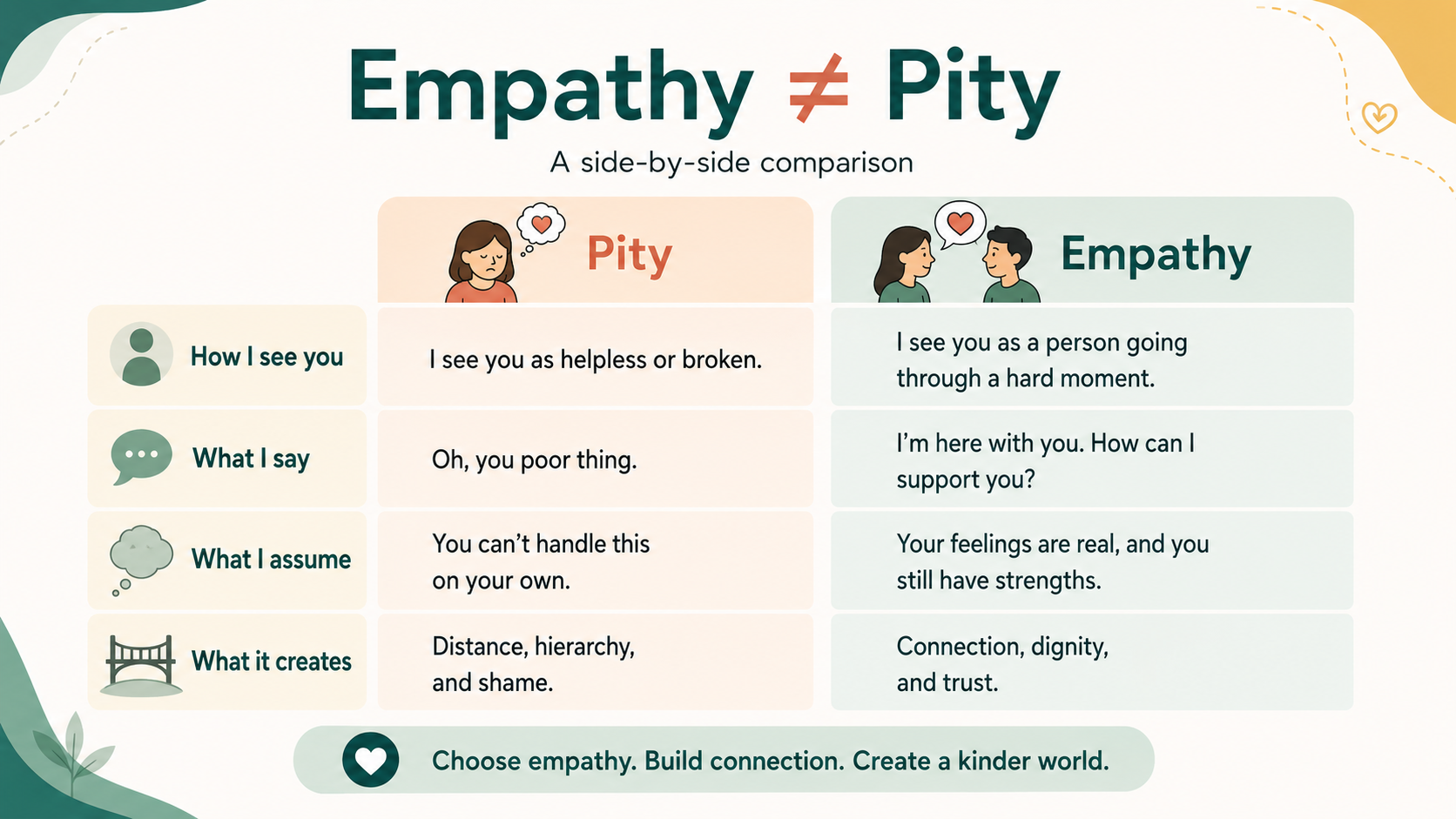
2. Questions and answers: Ask participants: “In terms of the child’s self-confidence, what differences have you observed between approaching a child in the institution with pity and approaching the child with empathic understanding?”